Roofing Guide · Florida
Types of Roofs & Roofing Materials: A Florida Homeowner’s Guide
From shingle to metal to tile, and from gable to hip to flat — here’s a plain-English guide to the roofing materials and roof shapes you’ll see across the Treasure Coast, and which work best in Florida.
Two things define your roof: the material it’s made of and the shape of the structure underneath. Both affect cost, durability, looks, and how well your roof handles Florida’s sun and storms. Here’s how to tell them apart.
Roofing Materials
Asphalt shingle
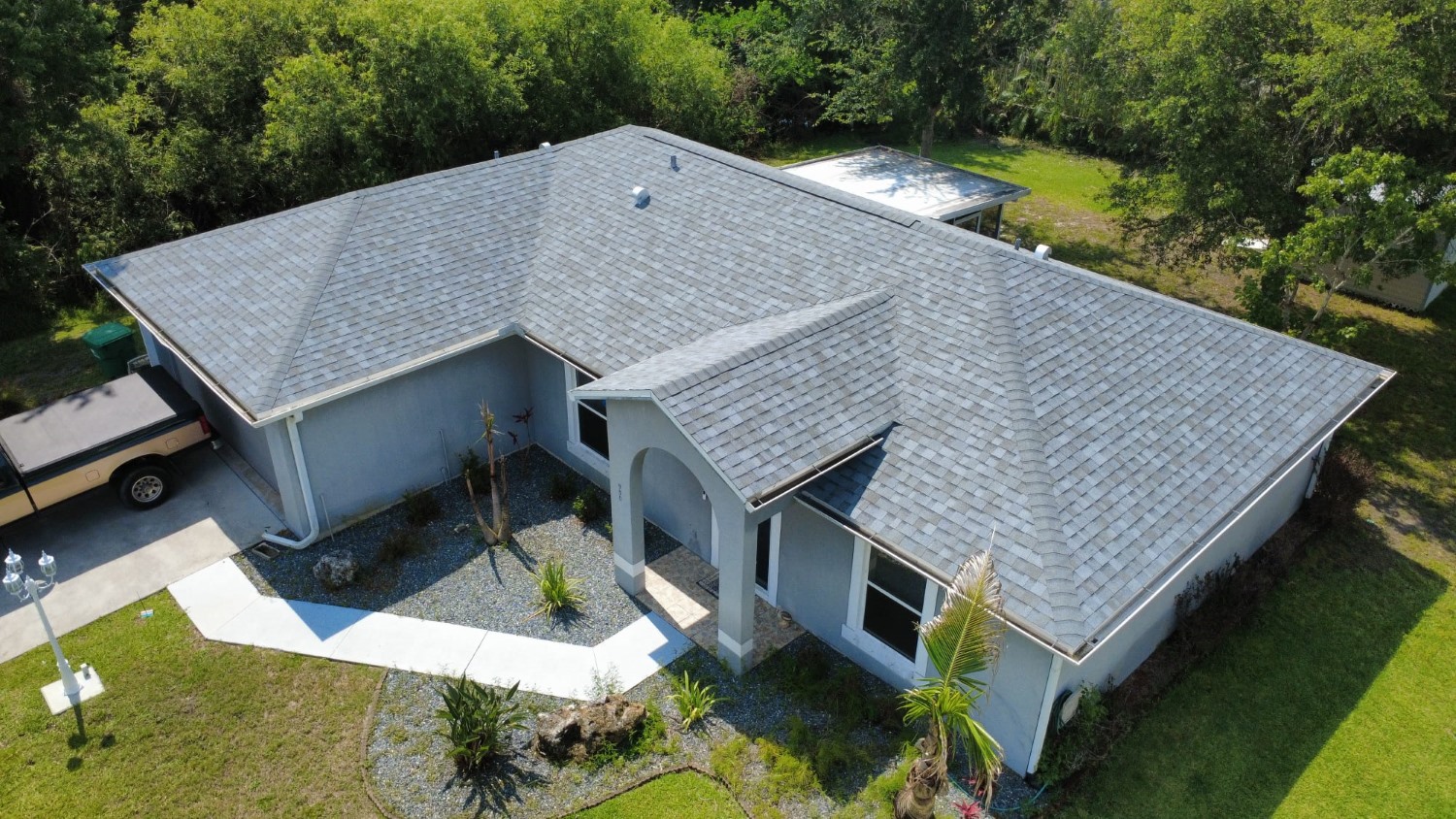
The most common and affordable. Architectural (dimensional) shingles are thicker and more wind-resistant than basic 3-tab. Lasts 15–25 years in Florida.
Metal
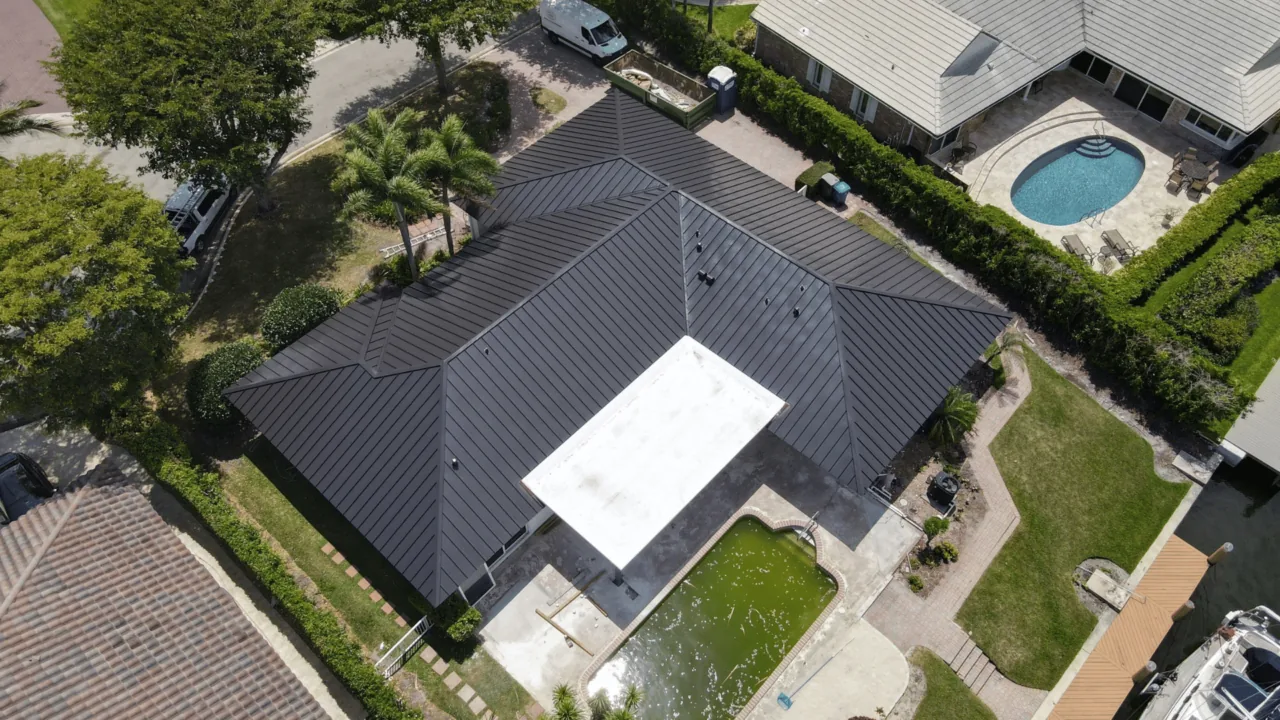
Standing-seam (hidden fasteners) or exposed-fastener panels. Reflective, wind-resistant, and long-lived — 40–70 years. Aluminum suits coastal salt air.
Tile
Concrete or clay, in barrel (Spanish) or flat profiles. The classic Florida look — tiles last decades, though the underlayment beneath needs periodic replacement.
Flat / low-slope (TPO, BUR)
Single-ply membranes (TPO), modified bitumen, and built-up roofing for additions, lanais, carports, and commercial buildings.
Common Roof Shapes & Styles
- Gable — the classic triangle/peaked roof with two sloping sides; simple and common.
- Hip — slopes on all four sides; more stable in high winds, popular in Florida.
- Flat / low-slope — minimal pitch, common on additions, carports, and commercial buildings.
- Gambrel & mansard — barn-style and four-sided sloped roofs seen on some homes.
- Combination — most homes mix shapes (e.g., hip with gable dormers).
In hurricane country, hip roofs often handle high winds better than gable roofs — but proper installation and fastening matter more than shape alone.
Which Roof Is Best for Florida?
There’s no single answer — it depends on budget, how long you’ll stay, looks, and coastal exposure. Shingle wins on value, metal on longevity and energy savings, tile on looks and durability. See our full best roof for Florida homes comparison and cost guide for the details.
Not Sure What You Have — or Need? Ask Us.
We’ll inspect your roof, identify the material and condition, and walk you through your options — honestly and with no pressure.
Roof Types FAQs
What is TPO roofing?
TPO (thermoplastic polyolefin) is a single-ply, heat-welded membrane used on flat and low-slope roofs — reflective, energy-efficient, and watertight. See our TPO & commercial roofing page.
What is a gable roof?
A gable roof has two sloping sides that meet at a ridge, forming a triangular shape at each end — the most common, simplest roof style.
What is the most common roof material in Florida?
Asphalt shingle, for its value, with metal and tile common on coastal and higher-end homes.
What roof shape is best for hurricanes?
Hip roofs (sloped on all four sides) tend to handle high winds well, but installation quality matters most.