
Commercial Roofing in Stuart, FL
TPO, modified bitumen, flat, and metal systems for businesses, plazas, warehouses, and multi-unit properties.
What Our Stuart Commercial Roofing Covers
TPO & single-ply
Reflective membrane systems that handle Florida heat and cut cooling load.
Flat & low-slope repair
Seam failures, blisters, and ponding corrected before they reach your tenants.
Drainage correction
Drains, scuppers, and slope issues — the root cause behind most flat-roof failures.
Maintenance programs
Scheduled inspections and condition reports so problems get caught while they are cheap.
Included in Every Commercial Roofing Job
Where We Work in Stuart
We take calls across Stuart — including downtown Stuart, Sewall's Point, Port Salerno, Rocky Point, and the riverfront streets along the St. Lucie River. If you are not sure whether your address is in our area, call us; it almost certainly is.
What Commercial Roofing Costs in Stuart
Priced per square foot after an on-site assessment
Commercial pricing depends on system type, square footage, deck condition, access, and whether you need a tear-off or a recover. We will walk the roof, photograph the problem areas, and give you options rather than one take-it-or-leave-it number. See our Florida roof cost guide for 2026 pricing by material, or use the roof cost estimator.
How the Job Actually Goes
We come out and actually get on the roof — no drive-by estimates.
You get photos of what we found, including the parts you cannot see from the ground.
We give you an itemized written estimate and explain the options, including doing nothing.
Once you approve, we schedule the work and handle permitting and inspections.
We clean up completely, magnet-sweep for nails, and hand you the warranty and documentation.
Permitting and code in Stuart
Who issues the permit
Work in Stuart is permitted through the City of Stuart Building Department. The City of Stuart maintains its own building department and fee resolution, separate from Martin County. We pull it, schedule the inspections, and meet the inspector — none of that lands on you.
What the code actually requires
Martin County enforces the Florida Building Code and its ASCE 7-22 wind provisions. Martin is not an HVHZ county; only Miami-Dade and Broward are. What does bite here is timing — county plan review commonly runs about 10–21 days, so we submit early rather than promising you a start date we cannot hold. Commercial low-slope work adds fire-classification and uplift documentation to the submittal.
What we see on Stuart roofs
Downtown Stuart and Sewall’s Point cover everything from historic frame to modern waterfront construction.
Wind mitigation, while we are up there
Roof-to-wall connections, deck attachment and secondary water barrier are the three line items an insurer scores you on. All three are visible during a tear-off and invisible afterwards, so we capture them then. How wind mitigation credits work →
Stuart Commercial Roofing FAQs
Do you actually work in Stuart?
We work Stuart and Martin County directly. Our shop is in Sebastian, and Stuart is a normal service day for our crews — not a special trip.
How fast can you get someone out to look at the roof?
For active leaks and storm damage we prioritize same-week and often next-day. For planned work, we usually have an estimator out within a day or two.
Do you pull the permit and handle inspections?
Yes. We pull the permit through the City of Stuart Building Department (or Martin County Building Division for unincorporated addresses), schedule the required inspections, and give you the closed-permit documentation at the end.
Will you repair a roof instead of pushing a replacement?
Yes, and we do it regularly. If your roof has years left, we will say so and tell you what to watch. A repair we talk you out of today is a replacement we earn honestly later.
Do you help with insurance claims?
We do. We document damage properly with dated photos and measurements so your adjuster has what they need. We are roofers, not public adjusters — but good documentation is most of the battle.
Get a Free Commercial Roofing Estimate in Stuart, FL
Call Leeward Roofing at 772-589-2400 or send us the details below. We inspect first, then quote — no pressure, no games.
Martin County storm damage? Don't let the second rain in.
Stuart, Palm City, Jensen Beach and Hobe Sound all take direct coastal wind, and Martin County plan review is not instant — so getting the damage documented early matters as much as the tarp itself.
- Look for lifted shingles, displaced tile and bent flashing from ground level.
- Photograph debris and any detached material where it landed.
- Call for tarping before the next band arrives, not after.
- Ask any contractor for their licence number and check it at myfloridalicense.com.
Recent Leeward jobs
Real Treasure Coast roofs installed by our own crews — not stock photography.
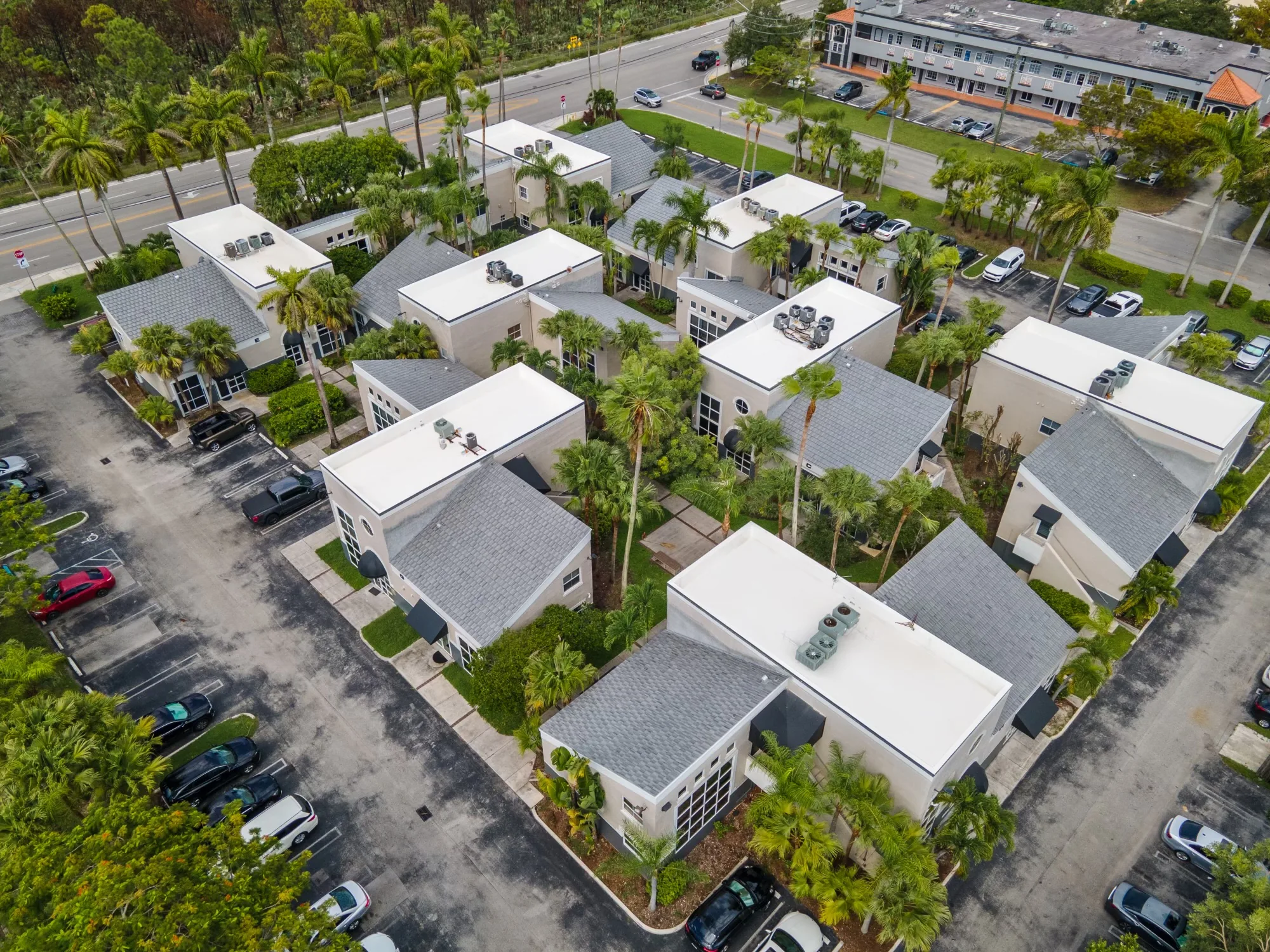
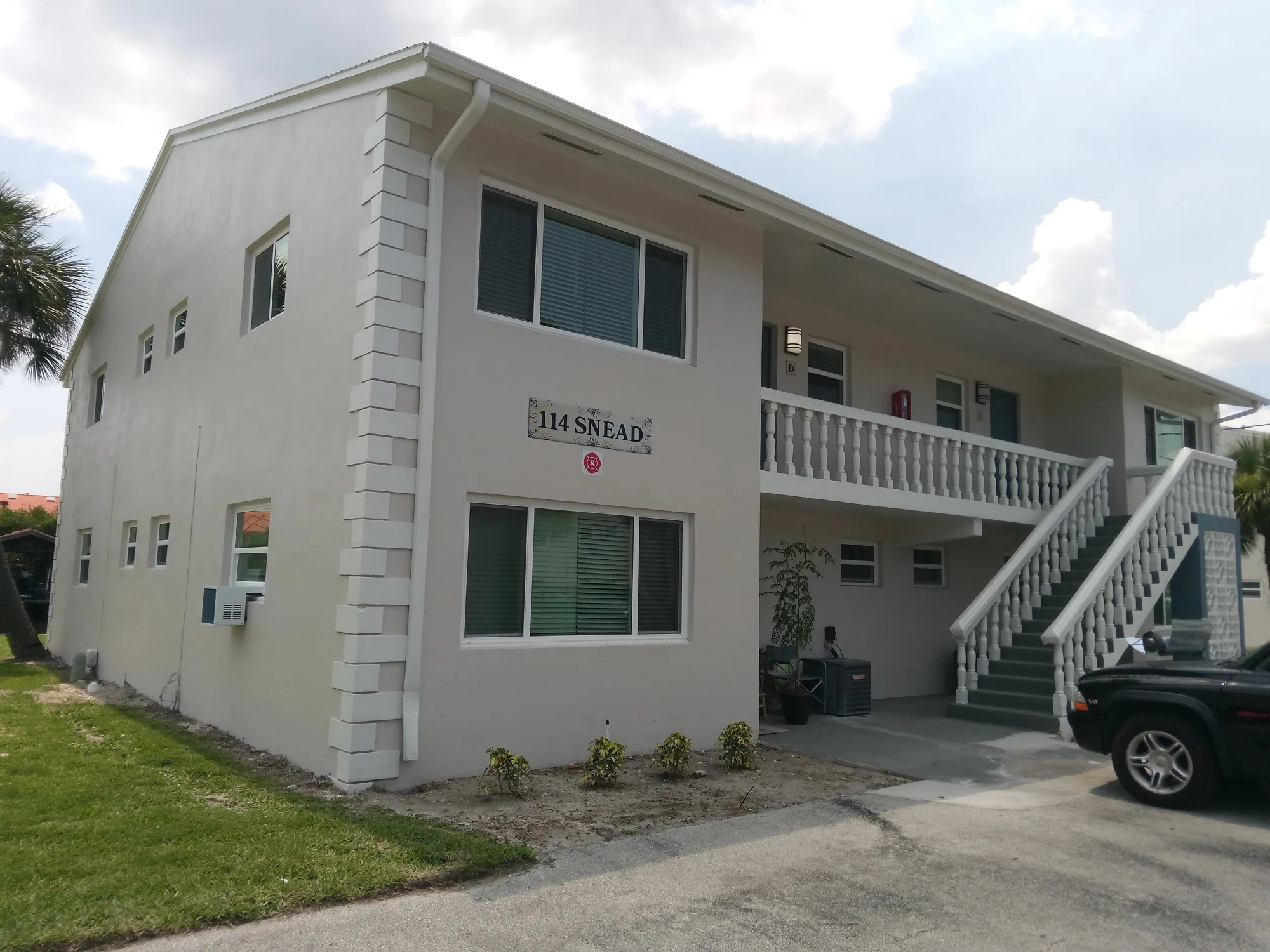
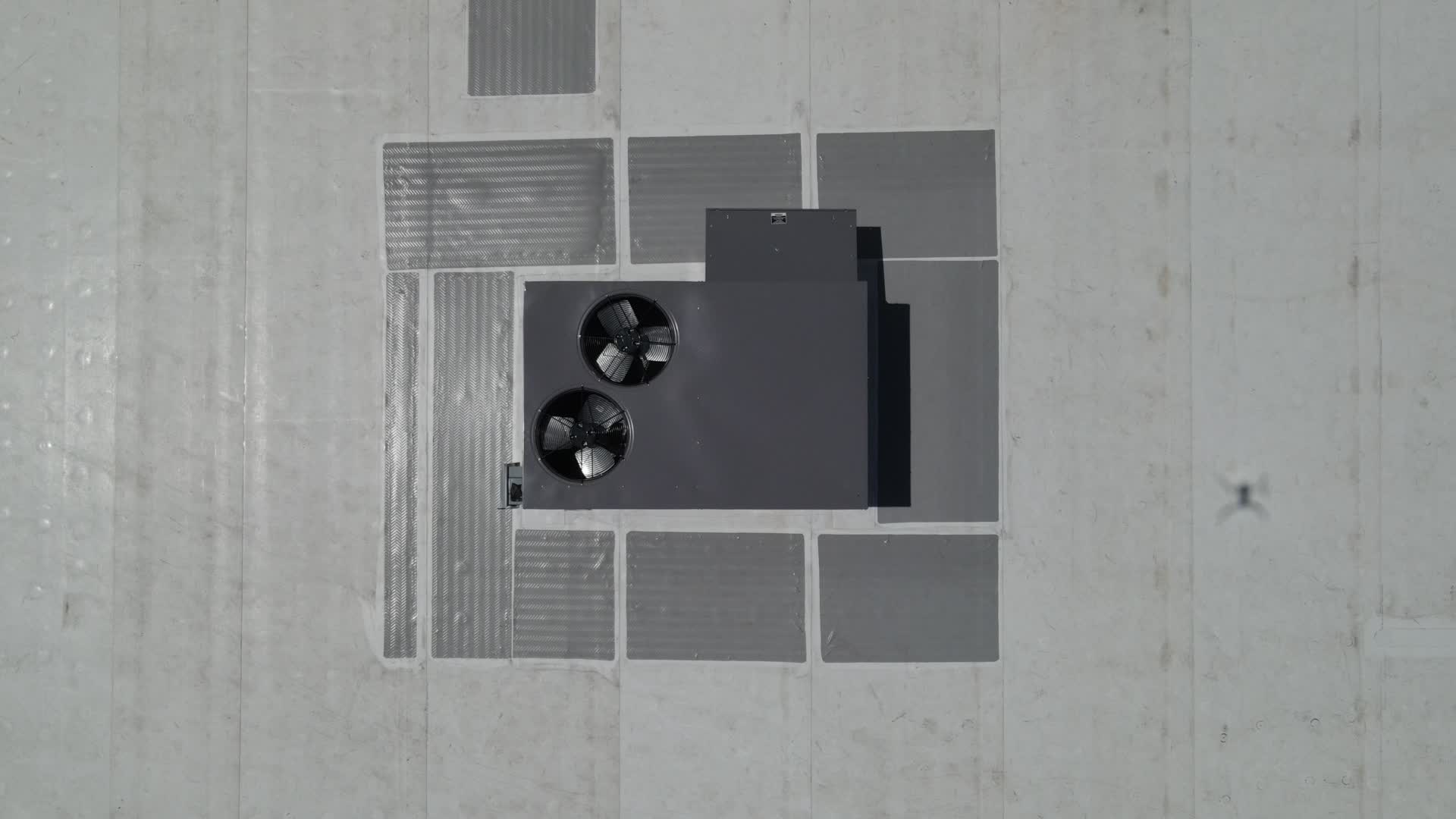
Commercial roofs fail in four places, not everywhere
Seams, terminations, penetrations and drainage. Everything else is detail.
Seams
Where two membrane sheets meet. TPO seams are hot-air welded into one continuous sheet, and a weld run too cool, too fast or over a dirty surface holds for two seasons then opens. We probe seams with a hook on every inspection because a weld either holds or it does not.
Terminations
Where the membrane stops — walls, parapets, curbs and edges. Termination bar, counterflashing and sealant have to be detailed properly and maintained. This is the most common failure we find on roofs installed by the lowest bidder.
Penetrations
Every pipe, conduit, drain, hatch and HVAC curb is a hole in a waterproof surface with a boot or flashing over it. On a commercial roof there can be dozens, and each one is a potential leak.
Drainage
Low-slope does not mean no slope. Blocked drains, undersized scuppers, crushed insulation and settled decking create ponding, and standing water finds every marginal detail and exploits it.
Mechanical damage
Foot traffic from HVAC service, dropped tools, stored equipment. Walkway pads where people actually walk cost very little and prevent a great deal.
Thermal cycling
Membranes expand and contract daily. Over years that movement works at every fastener, seam and termination — which is why low-slope needs periodic inspection in a way steep-slope does not.
The specification decisions that actually matter
Six numbers on the quote that separate a 25-year roof from a 12-year one. Ask about all six.
Membrane thickness
45, 60 or 80 mil. The jump from 45 to 60 is the best value decision on most commercial roofs, and it is where cheap bids quietly save money. Ask which you are being quoted.
Insulation R-value and thickness
Polyiso thickness drives energy performance and cost, and code sets a minimum. Tapered insulation to correct a drainage problem costs more and is frequently the thing that actually fixes your roof.
Attachment method
Mechanically attached is faster and cheaper; fully adhered performs better under uplift and is quieter. The right answer comes from the wind uplift calculation and your deck type, not from what installs fastest.
Cover board
A layer between insulation and membrane that resists punctures and improves fire and wind ratings. Routinely omitted from low bids, and routinely the reason one roof survives foot traffic and another does not.
Termination and flashing detail
Parapets, curbs, scuppers and edge metal. This is where low-slope roofs fail, so it is where the quote should be most specific — and usually is not.
Warranty type
A manufacturer material warranty is not the same as a full system NDL warranty covering material and labour. Know which you are getting, how long it runs and what voids it.
Keeping tenants trading while we work
On a Martin County commercial building the roof is rarely the hard part — keeping your tenants trading through it is.
Phased by section
We tear off only what we can dry in the same day. Nothing sits open overnight and no afternoon storm lands on an open deck above your tenant’s inventory.
Access agreed before day one
Crane or conveyor placement, dumpster siting, material staging, crew parking and fire lane clearance settled in advance rather than negotiated in the car park on the morning.
Rooftop equipment coordinated
HVAC units, condensers, exhaust fans and ductwork lifted, flashed and reset with your mechanical contractor. Every curb gets new flashing — reusing old flashing under a new membrane is how a brand new roof leaks in year two.
Written schedule to circulate
So your tenants hear about the noise from you, in advance, rather than from the noise.
Out-of-hours where scope allows
For restaurants, medical suites and retail we will work around trading hours. It costs more on the invoice and is frequently cheaper than the lost revenue.
An asset file at the end
Photo set, product approvals, warranty documentation and permit close-out, packaged so your property manager can file it and your next roofer can read it.
Stuart commercial roofing FAQs
How long does a commercial flat roof last?
A properly specified and installed TPO system typically gives 20 to 25 years in Martin County; modified bitumen similar. Membrane thickness, weld quality and drainage move that number far more than the manufacturer does. A 45 mil membrane with marginal welds and ponding water will not reach fifteen.
What thickness should I specify?
60 mil is the sensible default for most commercial buildings here. 80 mil is worth it where there is heavy foot traffic or significant rooftop equipment. 45 mil is where cheap bids find their savings - ask which you are comparing against.
Can I recover over the existing roof instead of tearing off?
Florida permits a single recover where the existing system is dry and structurally sound. We core-sample to verify rather than assume. If the insulation is saturated or there has already been a recover, it has to come off - and a bid that skips the coring is cheaper for exactly that reason.
Why is water standing on my roof?
Inadequate original drainage, blocked drains or scuppers, or settled insulation and deck creating low spots. Water persisting more than 48 hours after rain finds every marginal detail and voids many manufacturer warranties. Tapered insulation fixes it properly.
Will the work disrupt my tenants?
There is noise and crane or conveyor activity, but the roof stays weathertight throughout because we dry in everything we open the same day. We phase the work, agree access in advance and can work outside trading hours where the scope allows.
Who handles the rooftop HVAC units?
We coordinate lifting, flashing and resetting with your mechanical contractor. Every curb and penetration gets new flashing - reusing old flashing under a new membrane is how a brand new roof leaks in year two.
What is the difference between a material warranty and an NDL warranty?
A material warranty covers the membrane if the product itself is defective. A no-dollar-limit system warranty covers material and labour for the full assembly, is issued by the manufacturer after their own inspection, and requires a certified installer and a specified system. They are very different documents.
Who issues the permit in Stuart?
Inside Stuart city limits, the City of Stuart Building Department. Palm City, Rio, Port Salerno, Hobe Sound and Jensen Beach go to Martin County. Separate authorities with separate queues - we confirm which owns your building before quoting.
What is the design wind speed?
Martin County runs the highest design wind speeds in our service area, generally 165 to 175 mph ultimate. On a commercial low-slope roof that drives the uplift calculation, which in turn decides attachment method - mechanically attached versus fully adhered versus induction welded - and the fastening density. It is a calculation, not a preference.
Do you offer maintenance agreements?
Yes, and on a low-slope roof it is the highest-return maintenance money available. Scheduled seam and termination checks, drain clearing and minor repairs caught early. Low-slope failures are cheap at the start and very expensive at the end.
Do you work on Hutchinson Island condo associations?
Yes. Association work is phased so residents stay put, with a written schedule you can circulate to owners and a documented close-out package for the asset file. Ocean exposure also means Exposure D uplift pressures and corrosion-resistant metal throughout.
We also work near Stuart
Same crews, same trucks — these are the communities immediately around Stuart that we cover from the Sebastian shop.
Let's take a look at your roof. Free.
No pressure, no obligation, and an honest answer even when that answer is "you don't need a new roof yet."
- Free, itemized estimate in writing
- Most inspections scheduled within 24 hours
- We handle permits and insurance paperwork
- Licensed CCC1337211 and fully insured
Request your free estimate
Four quick fields. That's all we need.