
Flat & Low-Slope Roofing in Vero Beach, FL
Durable flat and low-slope roofing for Vero Beach homes and businesses — TPO, modified bitumen and coatings that keep water out and cooling costs down.
Flat & Low-Slope Roofing in Vero Beach
Flat and low-slope roofs — common on modern homes, additions, lanais and commercial buildings — need a very different approach than a sloped roof. Standing water and Florida sun are unforgiving, so the membrane and the details matter.
Leeward Roofing installs and repairs TPO, modified bitumen and coating systems built for Vero Beach’s climate. We correct drainage, seal every seam and penetration, and can add reflective coatings that cut heat and extend roof life.
Our Flat-Roof Systems
TPO membrane — energy-efficient and durable.
Modified bitumen for tough, layered protection.
Reflective coatings that lower cooling costs.
Leak repair & drainage correction for standing water.
Roofing Services in Vero Beach
Roof replacement in metal, tile, asphalt shingle & flat systems.
Roof repair for leaks, storm damage & aging roofs.
Free roof inspections & honest, itemized estimates.
Storm & insurance-claim inspections and documentation.
Why Vero Beach Homeowners Choose Leeward Roofing
Family-owned & operated on the Treasure Coast — you deal with owners, not a call center.
Florida-certified & fully insured (License CCC1337211) with trained in-house crews.
We handle all permitting and insurance paperwork so you don’t have to.
Rated 4.8★ on Google by your Indian River County neighbors.
Vero Beach Roofing FAQs
Why does my flat roof keep leaking?
Usually failed seams, penetrations or poor drainage. We find the real cause and fix it properly.
Can a coating extend my flat roof?
Often yes — a reflective coating can add years and reduce heat, when the roof is a good candidate.
Do you work on both homes and commercial buildings?
Yes — residential and commercial low-slope systems both.
Free Estimate in Vero Beach
Stop the leaks and the heat. Free flat-roof inspection for your Vero Beach home or business.
Storm damage in Indian River County? Don't wait for the second rain.
Indian River County sits on the open Atlantic with the lagoon behind it, so wind gets at a roof from both sides. The water that comes in during the first storm is what turns a repair into a renovation. We are based in Sebastian, which means our tarping crews are already inside the county when the call comes.
- Walk the perimeter and look for granules washed into the gutters and downspouts.
- Photograph soffit, fascia and gutter damage — adjusters ask for it.
- Tarp first, then worry about the permanent repair.
- Be wary of out-of-state crews that appear the day after a storm.
Recent Leeward jobs
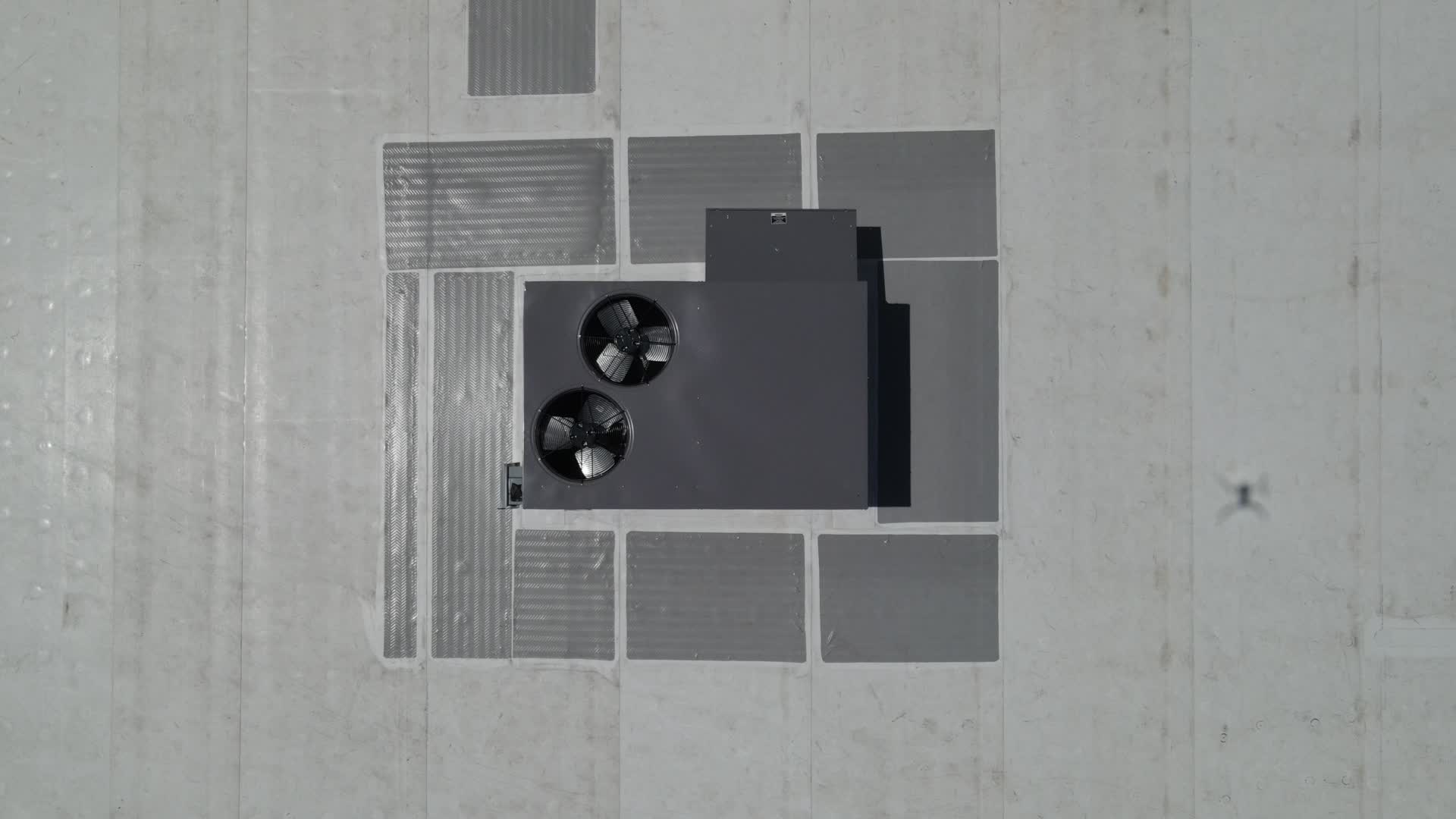
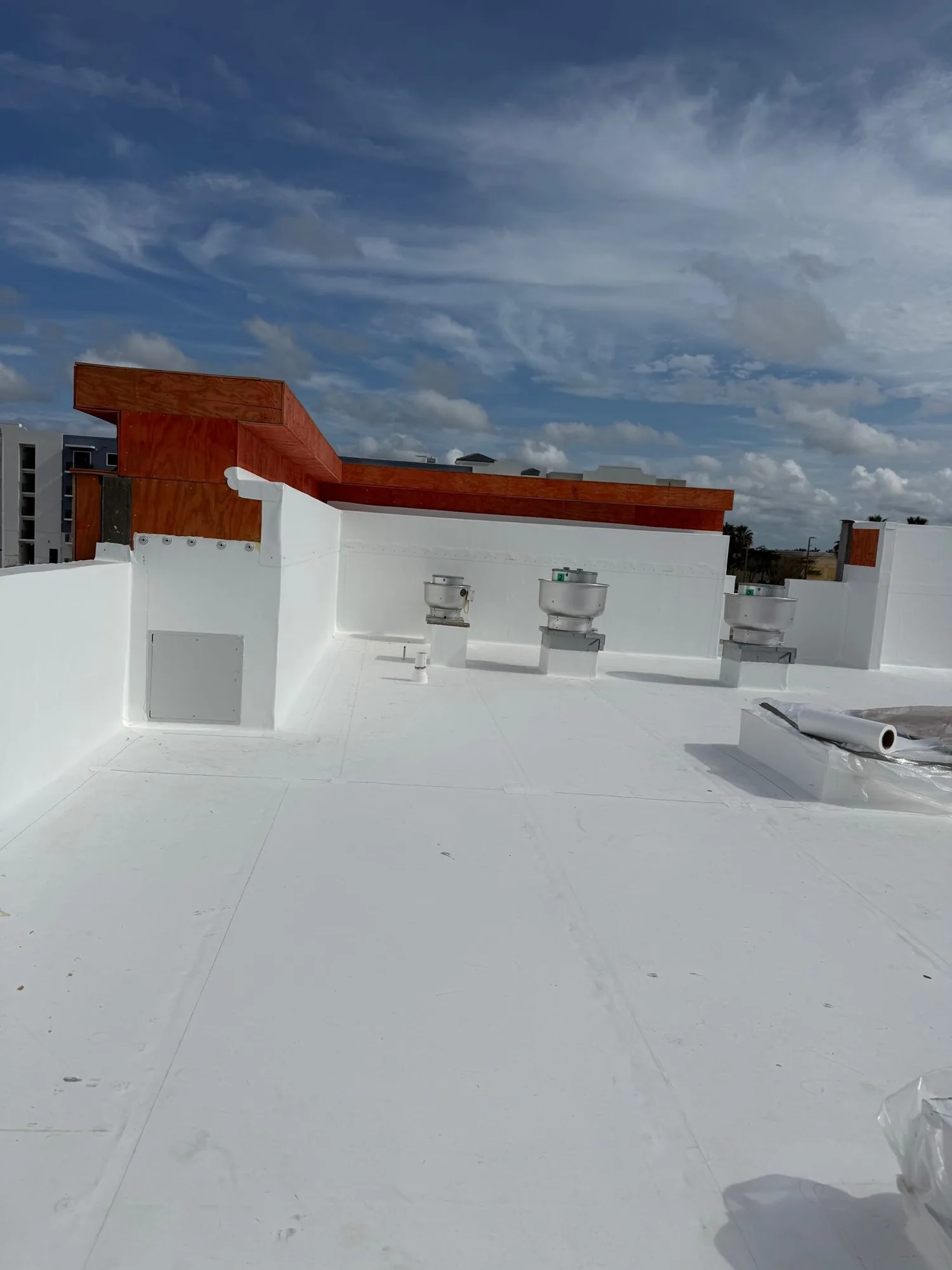
Real Treasure Coast roofs installed by our own crews — not stock photography.

Permitting and code in Vero Beach
Who issues the permit
Work in Vero Beach is permitted through the Indian River County Building Division. The county division handles permitting for both the City of Vero Beach and the unincorporated county, so a Vero address goes to the same reviewers either way. We pull it, schedule the inspections, and meet the inspector — none of that lands on you.
What the code actually requires
Indian River County builds to the Florida Building Code, which adopts the ASCE 7-22 wind provisions. Worth knowing: the Treasure Coast is not in the High-Velocity Hurricane Zone — only Miami-Dade and Broward carry that designation — so HVHZ product assumptions imported from South Florida do not apply here. Low-slope membrane systems approve as an assembly, deck to surfacing, not as a single product.
What we see on Vero Beach roofs
Vero Beach housing runs from 1950s downtown bungalows to barrier-island estates, so the right system varies street to street.
Wind mitigation, while we are up there
Insurance credits for wind mitigation are worth real money annually, but only if the inspection form can be completed truthfully. We build the roof so it can be, and hand you the photos. How wind mitigation credits work →
Almost every Vero Beach home has a low-slope section
Lanais, additions, carports, porches and flat-roofed mid-century sections. They are a different system from the main roof and they cause more leaks than people expect.
It is not a small version of your main roof
A steep-slope roof sheds water by geometry. A low-slope roof holds it, sometimes for hours, and relies entirely on a continuous waterproof membrane with properly detailed seams and terminations. Shingles or tile on a low-slope section is a defect, not a style choice, and we see it on older Vero Beach additions regularly.
Four failure points, every time
Seams where sheets meet, terminations where the membrane stops at a wall or edge, penetrations for pipes and equipment, and drainage. Failures in the middle of a membrane field are rare; failures at those four are the norm.
The transition is the most common leak of all
Where a low-slope lanai or addition meets the steep-slope main roof or a wall. Water coming off the main roof hits that junction at volume and under wind pressure. Detailed properly it lasts decades; detailed as an afterthought — which is how most additions were built — it leaks within a few years and gets blamed on the main roof.
Ponding is a real problem, not a cosmetic one
Low slope does not mean no slope. Water still standing 48 hours after rain means inadequate drainage, a blocked scupper or drain, or settled insulation. Standing water finds every marginal detail, accelerates membrane ageing, and voids many manufacturer warranties. Tapered insulation fixes it properly.
On the barrier island, add salt
Riomar, Central Beach, The Moorings and John’s Island low-slope sections need corrosion-resistant termination bar, edge metal, fasteners and counterflashing. Exposure D under FBC R301.2.1.4.3 also raises the uplift requirement, which affects attachment method.
Permits treat low-slope like tile and metal
Section 4 of the joint Indian River County and City of Vero Beach re-roof application requires the ASCE 7-16 components-and-cladding pressure worksheet for low-slope coverings, as it does for tile and metal but not for asphalt shingle. We prepare it.
Systems and pricing for Vero Beach low-slope
What we install, when each is right, and what it costs.
TPO — roughly $7.50 to $15.00 per square foot installed
Single-ply thermoplastic membrane, heat-welded at the seams, usually white. Reflectivity is the point in this climate: a white TPO lanai roof runs dramatically cooler than a dark one, which reduces the heat load on the room beneath it. Expect 20 to 25 years properly installed.
Modified bitumen — roughly $8.00 to $16.00 per square foot
Reinforced asphalt membrane in two or more plies. Tougher underfoot than single-ply, so a sensible choice where there is service traffic or rooftop equipment.
Low-slope-rated standing seam metal — roughly $12.50 to $21.00 per square foot
Some profiles are rated to very low pitches. Worth considering on a visible lanai where appearance matters and the run is simple, and it carries the same 40 to 70 year life as the rest of the metal family.
Coatings — roughly $2.50 to $6.50 per square foot
Silicone or acrylic over a sound, dry existing membrane can add years of life cost-effectively at the right moment. Over a wet or seam-failed roof it seals moisture in rather than out. We core-sample before recommending one and we will tell you if the answer is no.
Repairs — roughly $500 to $3,000
Seam repair, flashing rebuild, drain retrofit, penetration work, transition detailing.
What drives the number
Insulation thickness and R-value, number of penetrations, parapet and curb detail, deck type and access — far more than square footage alone.
Vero Beach flat roofing FAQs
My lanai roof leaks but the main roof is fine. Why?
Almost certainly the transition where the low-slope lanai meets the main roof or the wall. Water coming off the steep-slope roof hits that junction at volume and under wind pressure, and on most additions it was detailed as an afterthought. It is the single most common low-slope leak we find in Vero Beach.
How long does a flat roof last in Vero Beach?
A properly installed TPO system typically gives 20 to 25 years here, and modified bitumen similar. Our UV load and thermal cycling are harder on membranes than most of the country, so installation quality, seam welding and drainage move that number more than the material choice does.
Why is water standing on my flat roof?
Either the drainage was never adequate, a drain or scupper is blocked, or the insulation and deck have settled into a low spot. Water persisting more than 48 hours after rain accelerates membrane ageing, finds every weak detail and voids many manufacturer warranties. Tapered insulation corrects it properly.
Can I just have it coated?
Sometimes, and it is genuinely cost-effective when the substrate is dry and the seams are sound. We core-sample first to check for trapped moisture. Coating a wet roof seals water in and accelerates the failure, so if the cores come back wet we will tell you no.
Is white TPO worth it?
Yes, in this climate. Reflective membrane meaningfully reduces surface temperature, which lowers the heat load on the room beneath and slows thermal ageing of the whole assembly. On a lanai or Florida room the comfort difference is noticeable.
Someone put shingles on my flat section. Is that a problem?
Yes. Shingles rely on slope to shed water and are not a waterproofing system. On a low-slope section they will leak, usually sooner rather than later. It needs a proper membrane, and we see this on older Vero Beach additions regularly.
Do you do low-slope work on the barrier island?
Yes, with corrosion-resistant termination bar, edge metal, fasteners and counterflashing as standard. Exposure D under FBC R301.2.1.4.3 also raises the uplift requirement out there, which affects attachment method and fastening density.
Does low-slope need a special permit?
Section 4 of the joint Indian River County and City of Vero Beach re-roof application requires an ASCE 7-16 components-and-cladding pressure worksheet for low-slope coverings, as it does for tile and metal - though not for asphalt shingle. It is routine and we prepare it.
Can you do my flat section at the same time as the main roof?
Yes, and it usually makes sense. Doing both together means one permit, one mobilisation and a properly detailed transition between the two systems rather than two contractors pointing at each other later.
Do you offer maintenance on low-slope roofs?
Yes. Scheduled seam and termination checks, drain clearing and minor repairs caught early. On a low-slope roof this is the highest-return maintenance spend there is, because these failures are cheap at the start and very expensive at the end.
We also work near Vero Beach
Same crews, same trucks — these are the communities immediately around Vero Beach that we cover from the Sebastian shop.
Let's take a look at your roof. Free.
No pressure, no obligation, and an honest answer even when that answer is "you don't need a new roof yet."
- Free, itemized estimate in writing
- Most inspections scheduled within 24 hours
- We handle permits and insurance paperwork
- Licensed CCC1337211 and fully insured
Request your free estimate
Four quick fields. That's all we need.