
A roof your family can stop thinking about.
Shingle, tile, metal and flat systems installed for Florida homes — engineered for hurricane wind, salt air and relentless sun.
Every material, matched to your home
We don’t push one system. We look at your roof deck, your neighborhood, your insurance situation and your budget, then tell you honestly what makes sense.
Asphalt shingle
Architectural shingles rated for high wind. The best value per year of protection for most Treasure Coast homes.
Tile
Concrete and clay tile that handles coastal weather and holds its look for decades. The Florida classic, done right.
Metal & standing seam
The longest-lasting option we install. Excellent wind performance and often a meaningful insurance discount.
Flat & low-slope
TPO and modified bitumen for additions, lanais and low-slope sections that shingles were never built for.
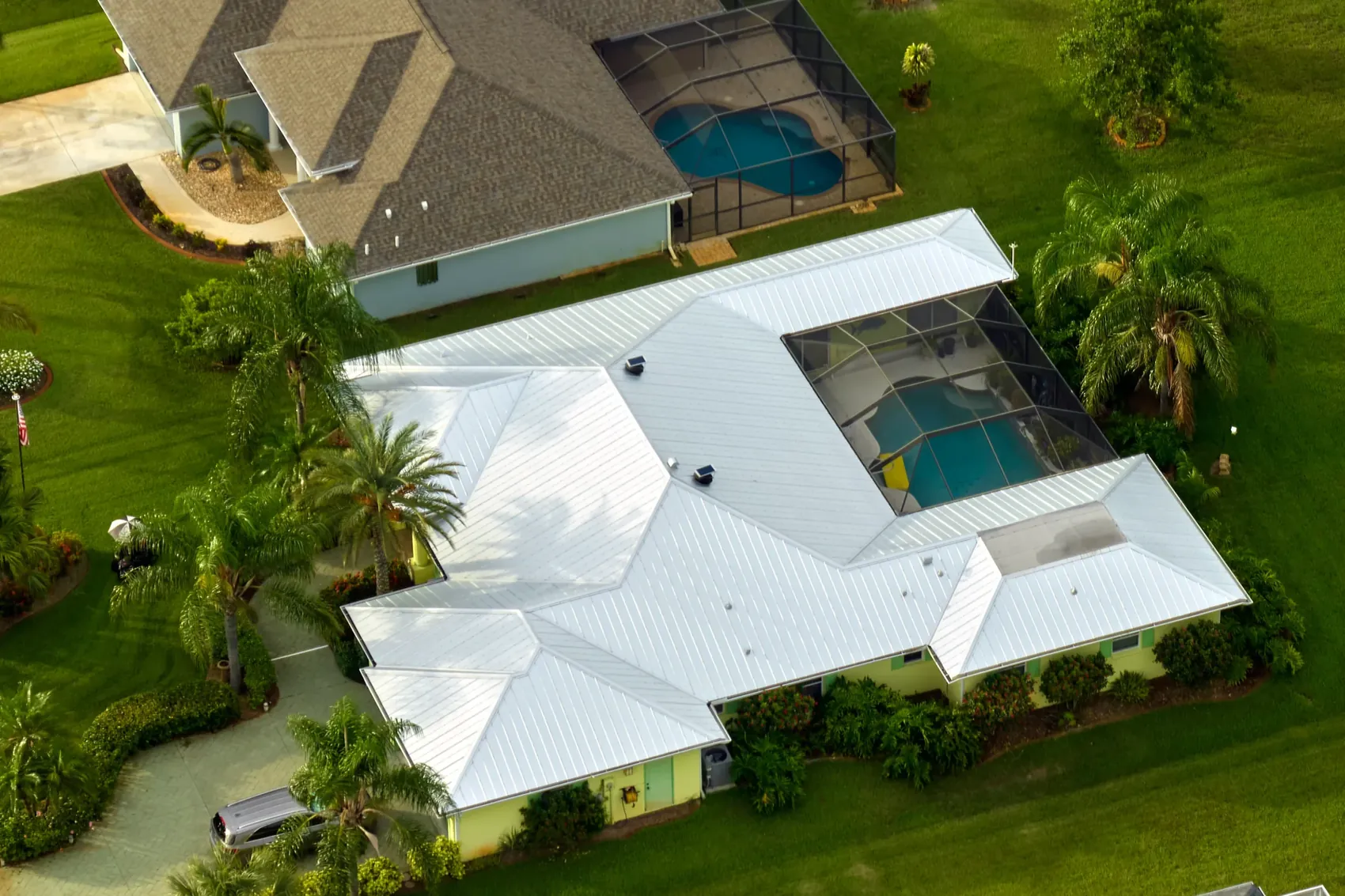
We handle the parts nobody warns you about
Permits, code compliance, deck inspection, insurance documentation — the paperwork side of a Florida roof is where most projects go sideways. We take all of it.
Our crews are in-house and insured. The same people who quote your roof are accountable for it, and you can reach an owner if something isn’t right.
What working with Leeward actually looks like
Free written estimate
Itemized, in writing, with no pressure and no expiring-today discount games.
Straight repair-vs-replace answer
If your roof has good years left, we will tell you that instead of selling you a replacement.
Full deck inspection
We pull back and look at the decking. Rot found before install is cheaper than rot found after.
Licensed CCC1337211
Florida certified, liability and workers’ comp carried on every job, every crew.
Choosing a system for a Florida coastal home
Four honest comparisons. There is no single right answer — there is the right answer for your house, your budget and how long you plan to own it.
Architectural asphalt shingle — 20 to 25 years, $5.50–$9.00 per sq ft
The default, and for good reason: the best protection per dollar per year for most homes. High-wind rated architectural shingle installed to current Florida fastening schedules performs well. Its weakness is UV — our sun ages asphalt faster than almost anywhere, so a shingle roof here does not reach the number printed on the wrapper. See asphalt shingle roofing.
Standing seam metal — 40 to 70 years, $12.00–$20.00 per sq ft
Concealed fasteners, no exposed penetrations to back out, excellent uplift performance and reflectivity that cuts cooling load. It is the system we recommend most often near the water, because salt air destroys exposed fasteners and standing seam does not have any. Roughly double the cost and roughly triple the life. See standing seam and metal roofing.
Concrete or clay tile — 20 to 25 years of underlayment, $11.00–$22.00 per sq ft
The tile itself can last 50 years. The underlayment beneath it, which is what actually keeps water out, cannot. Budget for a tile lift-and-relay or a full underlayment replacement on that shorter clock, and be aware that tile adds significant dead load the structure has to carry. Beautiful, appropriate to the architecture here, and not low-maintenance. See tile roofing.
Low-slope sections — TPO or modified bitumen
Almost every Florida house has some: a lanai, an addition, a carport, a porch. They are a different system with different failure modes and they are frequently the source of a leak everyone assumed came from the main roof. See flat & low-slope roofing.
What we will not do
Recommend a system because we have it in the yard. We install all of the above, which is precisely why our recommendation is worth something.
What coastal actually does to a roof
Sebastian, Vero Beach and the barrier island are a harsher environment than three miles inland, and it shows up in the details rather than the field.
Salt attacks the metal first
Not the shingles, not the tile — the fasteners, drip edge, valley metal, vent hoods and flashing. On homes near the inlet, the lagoon or the ocean we specify corrosion-resistant hardware as standard, because galvanised steel that would last decades inland will not last here.
UV is relentless
Florida sun degrades asphalt binders, rubber pipe boots and exposed sealant far faster than the national averages assume. Pipe boots in particular are frequently finished at 10 to 12 years while the shingles around them look fine.
Wind loads are real numbers, not marketing
Indian River County design wind speed is 160 mph east of I-95 and 150 mph west. That drives fastener type, spacing and edge detail, and it is why metal cap nails are required here for underlayment attachment.
Driven rain goes uphill
Hurricane-force wind pushes water horizontally and under the covering. That is the entire reason the secondary water barrier is mandatory on reroofs here — it is the layer that saves your ceilings when the surface is compromised.
Humidity and ventilation
A poorly ventilated Florida attic runs extremely hot and holds moisture, which cooks the shingles from underneath and shortens their life from the side nobody inspects. Intake and exhaust have to be balanced, not just present.
Organic growth
Algae streaking and moss in shaded areas under oak canopy. Mostly cosmetic on shingle, genuinely damaging on tile where it holds moisture against the underlayment.
What we do on a residential job
The parts that are the same whether you are buying a repair or a whole roof.
Free inspection with photographs
Of your roof, not a stock library. You get the pictures whether or not you hire us. See roof inspections.
Itemised written estimates
Line by line, including the per-sheet decking price before we start, so you can compare it honestly against anyone else’s bid.
Permits and inspections handled
We identify the correct jurisdiction, submit the packet with product approvals, and meet the inspector at dry-in and final. You do not call the county.
Your property protected daily
Tarps over landscaping and pool cages, plywood on anything fragile, and a magnetic nail sweep at the end of every day rather than only at the end of the job.
Insurance documented properly
If a claim is involved, photographs and scopes in the format carriers expect. See storm damage repair.
Warranty paperwork in your hand
Manufacturer material warranty and our workmanship warranty, with the permit close-out and the full photo set, at completion.
Book a free residential roof assessment → or call 772-589-2400.
Ventilation, decking and the parts nobody quotes
Three things that separate a roof that reaches its rated life from one that does not — and that cheap bids leave out.
Balanced attic ventilation
Exhaust at the ridge and intake at the soffit, in proportion. Ridge vent with blocked or absent soffit intake does very little except let conditioned air out. A Florida attic that cannot breathe runs 140°F-plus and bakes the shingles from underneath, which is a failure mode you will never see from the outside. We check intake as well as exhaust, because most people only sell you the exhaust.
Deck re-nailing
With the covering off, re-nailing the sheathing to current uplift spacing — 8d ring-shank at 6 inches in the field and 4 inches at perimeters and corners — costs relatively little and earns maximum roof deck attachment credit on your wind mitigation form. Skipping it is the most expensive saving on any reroof estimate.
Secondary water barrier
Mandatory on Florida reroofs of site-built single-family homes, and the thing that keeps water out of your house when wind takes the covering off. Product approval documentation has to be on site and attached to the permit. We submit ours up front.
Drip edge and edge metal
Wind uplift starts at the edges. Properly sized, properly fastened drip edge and gable metal is not an accessory, it is structural to how the roof performs, and undersized edge metal is one of the most common defects we find on other people’s recent work.
New penetration components, every time
New pipe boots, new vent hoods, new valley metal. Reusing 15-year-old rubber boots under a brand new roof means you will be calling a roofer in three years about a roof that is otherwise fine. If a bid does not say these are new, ask.
Flashing rebuilt, not re-sealed
Chimneys, skylights and wall transitions get new step and counter flashing woven into the new courses. Sealant over old flashing is a 12-month fix priced as a 20-year one.
Residential roofing FAQs
What roof is best for a Florida coastal home?
It depends on how close you are to salt and how long you plan to own the house. Near the water, standing seam metal is usually the strongest case - no exposed fasteners for salt to attack, excellent uplift performance and 40 to 70 years of life. Further inland, a high-wind architectural shingle is the better value per year. We install both and will tell you which fits your situation.
How long should a roof last here?
Architectural shingle 20 to 25 years, tile underlayment 20 to 25 with a much longer-lived tile field, metal 40 to 70. Our UV and salt exposure means Florida roofs generally run at the lower end of national ranges, and ventilation quality moves that number more than most people expect.
How much does a residential roof cost?
Most single-family reroofs on the Treasure Coast land between $12,000 and $32,000 depending on material, size, pitch and complexity. Run your own numbers with our roof cost estimator, then get a written quote - the estimator is a good planning tool, not a bid.
Do I need a permit to reroof my house?
Yes, in every jurisdiction we work in. We pull it, submit the product approvals, and meet the inspector at dry-in and final. A contractor suggesting you skip the permit is telling you something important about how they work.
Can I live in the house during the work?
Yes. It is loud and there is vibration, but it is entirely liveable. Take pictures off the walls in rooms directly under the work and keep vehicles clear of the driveway in the mornings.
What about my solar panels?
They come off and go back on. We coordinate with your solar installer so the array is down for the shortest window possible, and we flash the new penetrations ourselves.
Will my insurance premium change after a new roof?
It very often improves, but only if you have a current wind mitigation inspection done afterwards to document it. The form was rewritten effective 1 April 2026. See our wind mitigation guide.
Do you work on tile roofs?
Yes - repairs, lift-and-relay underlayment replacement, and full tile replacement in both concrete and clay. See tile roofing.
How do I know a contractor is legitimate?
Verify the Florida licence number at myfloridalicense.com, ask for a certificate of insurance naming you, refuse to sign anything on the driveway, and be very cautious of anyone offering to cover your deductible. Ours is CCC1337211.
Do you do gutters, soffit and fascia?
We handle soffit, fascia and drip edge work as part of roofing scopes, since that is where roof water damage shows up first. Ask when we inspect and we will tell you plainly what is in scope for your job.
Proudly serving the Treasure Coast
Let's take a look at your roof. Free.
No pressure, no obligation, and an honest answer even when that answer is "you don't need a new roof yet."
- Free, itemized estimate in writing
- Most inspections scheduled within 24 hours
- We handle permits and insurance paperwork
- Licensed CCC1337211 and fully insured
Request your free estimate
Four quick fields. That's all we need.